Describe the sand before naming its source
Colour, apparent grain size and visible fragments are useful clues, but a photograph alone is not a mineral identification.
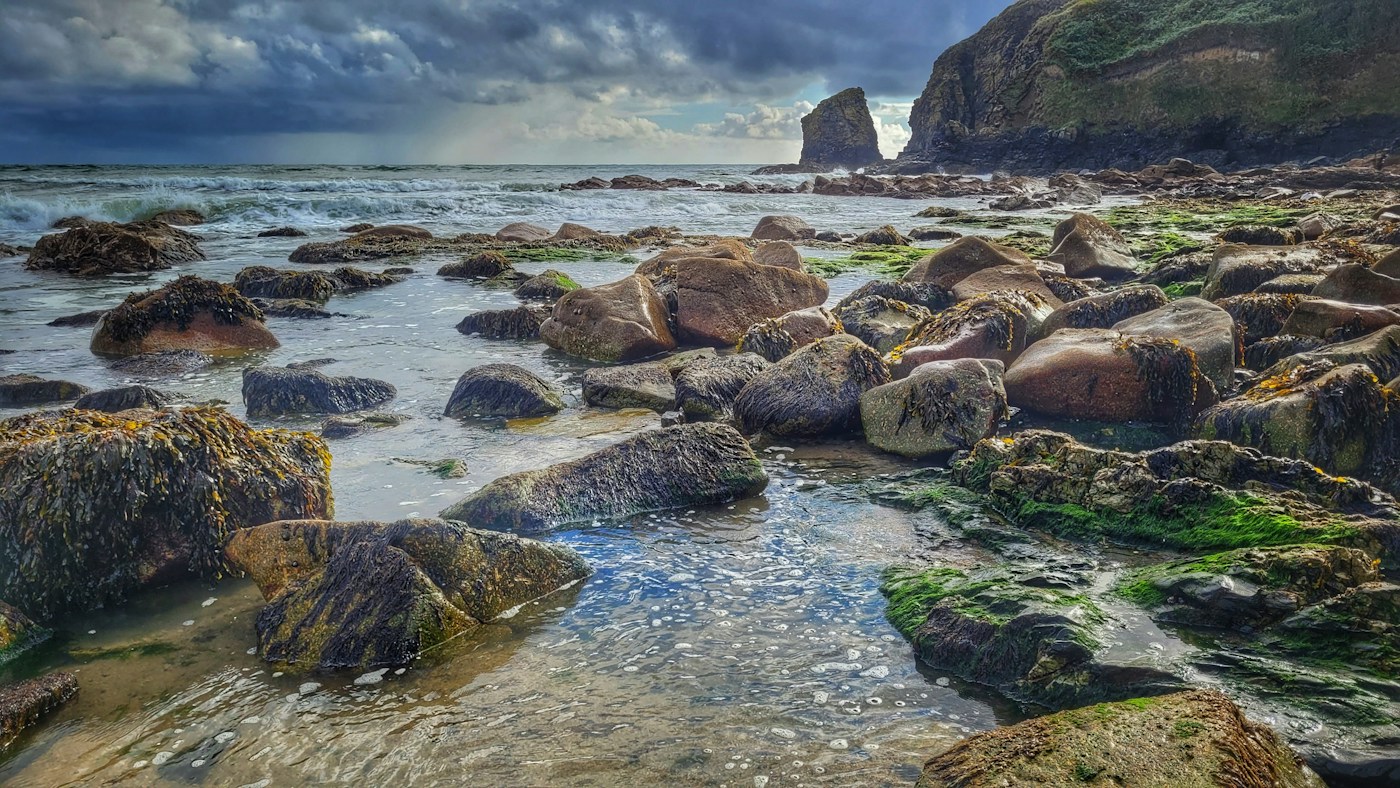
Beach sand can appear uniform from standing height and surprisingly varied when viewed more closely. A good first description records that variety without pretending it proves a complete geological history. You can learn a great deal by observing material in place and comparing the scale of the whole beach with the detail of its surface.
Choose a small visible patch
Work from a permitted, stable position and leave the material where it lies. Select a patch you can view without disturbing wildlife or entering a restricted area. Note whether it is wet or dry, in direct light or shadow, because those conditions affect what the surface looks like.
Describe the dominant colour, the variation between visible grains and any obvious fragments. Use comparative words such as finer, coarser, pale or dark unless you are using a proper measurement method. A phone photograph without a scale should not be presented as a precise grain-size analysis.
Look for differences within the patch
Ask whether the surface is evenly mixed or shows bands, streaks or clusters. A close photograph can preserve the arrangement without removing a sample. If using an object for scale, use something you brought, keep it clear of organisms and remove it afterwards without rearranging the sediment.
Make the description before consulting an identification chart. This reduces the temptation to see only the feature that matches a favourite explanation. A dark grain can be recorded as dark before it is assigned a mineral name.
Use colour as a question
The National Park Service explains that beach-sediment colours relate to parent materials, which may come from nearby sources or travel considerable distances. It also describes contributions from minerals and shell material. Colour can therefore suggest questions about the ingredients and transport history, but it does not establish a unique answer by itself.
Consult a reliable local geological reference for the actual coast. Keep a distinction between a general example from elsewhere and evidence about the place in front of you. A familiar photograph of black or white sand is not proof that a visually similar patch has the same origin.
Compare observations honestly
If you view another patch, record what changed: position, moisture, lighting and apparent mixture. Avoid attributing every difference to a new source of sediment. The conditions of the observation may account for part of what you see.
End with a short description that someone else could understand without the image. For example, a mostly pale surface with scattered darker grains says more than beautiful sand and less than an unsupported mineral diagnosis. That middle ground is useful: careful enough to guide further learning, modest enough to preserve what remains unknown.
Geology reference: National Park Service: coastal sediment colours.